
Dear visitors,

Human genetics is today one of the most dynamic disciplines in modern medicine. The advent of high-throughput sequencing technologies and their continuous evolution have revolutionized the analysis of the human genome, enabling diagnoses that were unimaginable only a few years ago. At the same time, our research in human genetics provides ever-deeper insights into the genetic aspects of biological processes and the molecular mechanisms underlying disease, thereby bridging basic science and clinical application. This close integration of diagnostics, research, and translation drives progress in our field and paves the way for new therapeutic strategies and personalized healthcare. A motivated, skilled, and dedicated team is at your service to ensure state-of-the-art patient care.

The Department of Human Genetics has a diagnostic laboratory accredited according to DIN EN ISO 15189, as well as highly specialized technological and bioinformatic infrastructure. This enables us to analyze the entire genome within routine diagnostics and research, uncovering pathogenic variants and their clinical relevance. Our goal is not only to elucidate the genetic causes, mechanisms, and relationships of diseases but also to contribute to solutions—particularly through innovative therapeutic approaches such as the clinical application of genome editing using CRISPR/Cas technologies. We also share our knowledge and experience to inspire and train the next generation of human geneticists.

On these pages, we invite you to learn more about the work of our dedicated team and to explore the range of services offered by our clinical genetics outpatient unit and diagnostic laboratory. You will also find insights into the diverse activities of our research groups.

Thank you for your interest!

Prof. Dr. med. Bernd Wollnik
Director Department of Human Genetics
News from Human Genetics

06/04/2026 Human Genetics

Gene of the Month - May: PTCHD1-AS

Microdeletions affecting the X‑chromosomal lncRNA locus PTCHD1-AS increase the risk of autism and are particularly associated with the core features of autism spectrum disorder (ASD), namely altered social interaction and communication as well as repetitive behaviours. In a Nature study, the authors analyzed whole‑genome sequencing data from 9,349 individuals with ASD and 8,332 controls and identified 27 boys with X‑chromosomal microdeletions involving PTCHD1-AS.

PTCHD1-AS encodes a long…

08/19/2025 News

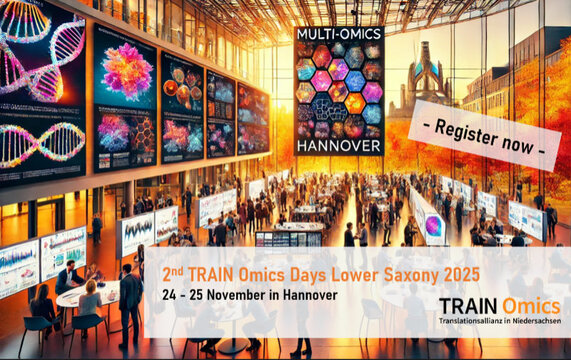
2nd TRAIN Omics Days Lower Saxony 2025: Register now!

Registration is now open for the upcoming 2nd TRAIN Omics Days Lower Saxony 2025. The conference will be held in Hannover on 24-25 November.

All interested individuals from the TRAIN partner institutes from the field of molecular and translational health research can participate. Registration Deadline: 1 November 2024

The preliminary program and all information on calls for projects and posters can be found on the conference website:

07/29/2025 News

MoReHealth Niedersachsen: Multi-Omics Initiative for Personalized Medicine

MoReHealth Niedersachsen is an innovative research project bringing the latest multi-omics research—meaning the simultaneous analysis and interpretation of different biological layers such as DNA, proteins, and metabolic products—into broadly applicable, personalized healthcare. The project is conducted by leading experts from top scientific institutions in Lower Saxony: Hannover Medical School (MHH), University Medical Center Göttingen (UMG), the Helmholtz Centre for Infection Research in…

04/09/2025 News

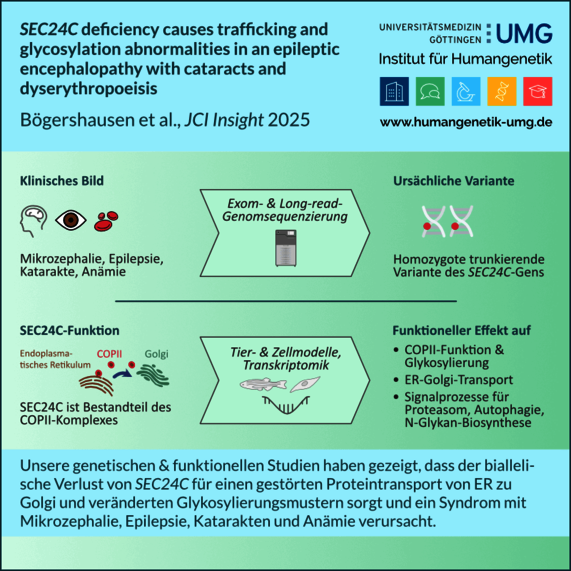
Identified heterozygous truncating SEC24C variants affect protein transport and glycosylation and cause previously undescribed syndrome with epilepsy, cataracts and anemia

SEC24C deficiency causes trafficking and glycosylation abnormalities in an epileptic encephalopathy with cataracts and dyserythropoeisis.

JCI Insight. 2025 Mar 25:e173484. doi: 10.1172/jci.insight.173484. Epub ahead of print.

Article in Pubmed.

03/17/2025 News

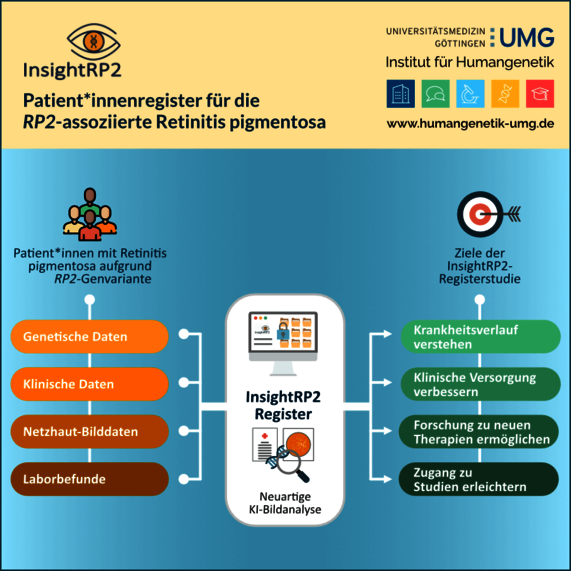
InsightRP2: First global patient registry for RP2-associated retinitis pigmentosa starts at UMG

Mutations in the RP2 gene cause a specific form of retinitis pigmentosa, a group of inherited retinal disorders. The InsightRP2 registry helps clinicians and researchers better understand the genetic basis and progression of RP2-associated retinitis pigmentosa. Additionally, they can focus their research and the development of future treatment approaches on enhancing the quality of life for patients.

11/19/2024 News

Second Registry for Patients with Hearing Loss due to CABP2 (DFNB93) variants

Building upon success following release of the first patient registry for isolated hearing impairment due to otoferlin-related hearing impairment in late 2023, we are pleased to announce the addition of a second registry for patients with CABP2 (DFNB93) diagnoses. This dedicated database is a collaborative effort between the Institute of Human Genetics and Institute for Auditory Neuroscience at the University Medical Center Göttingen (UMG).

Gene of the Month

Every month, we present a current research paper on a gene. 

Follow us