
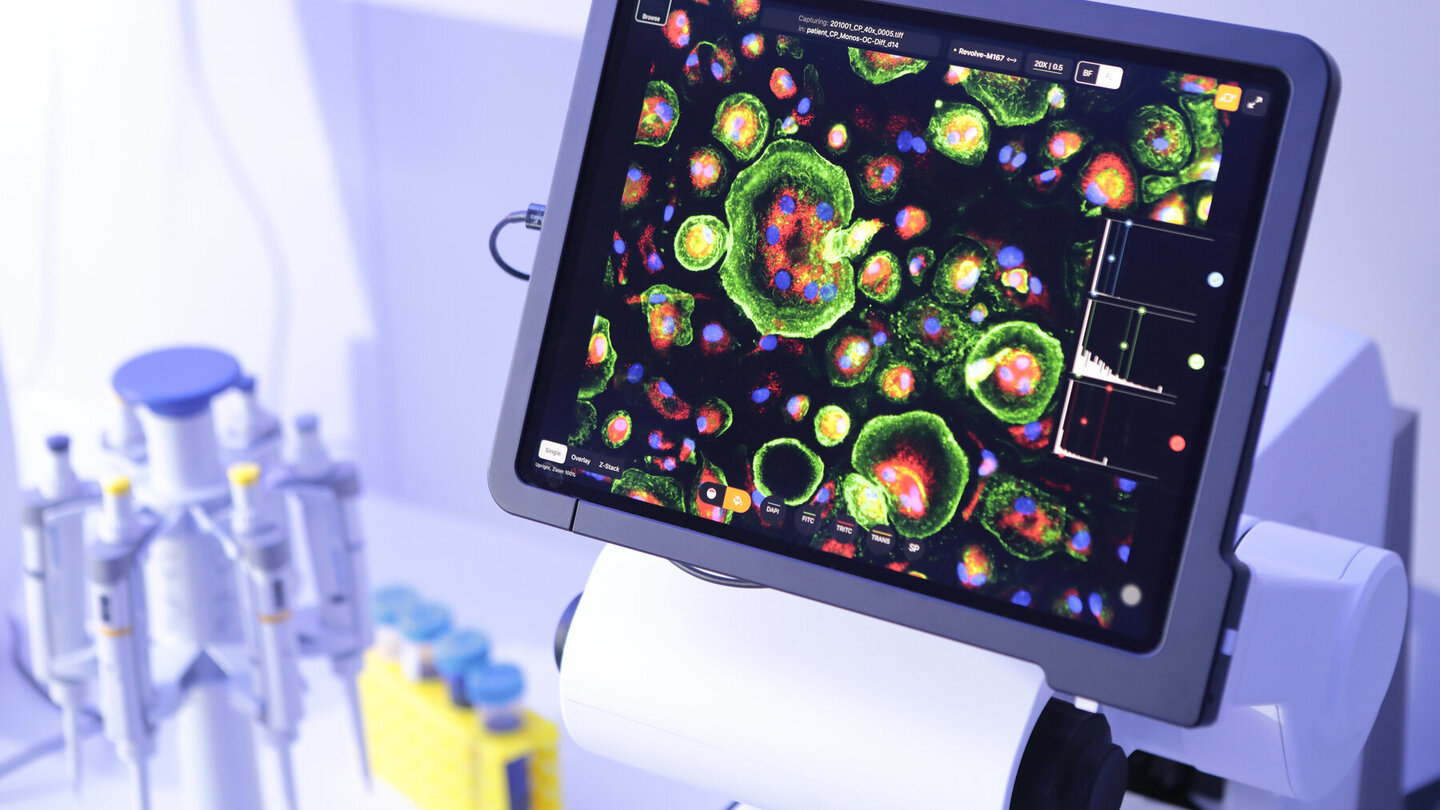
Rapid technological developments have opened up new horizons for human genetic research: genome sequencing can be used to detect almost all changes in genetic material. In addition, CRISPR/Cas9 technology, one of the most significant genetic engineering tools of recent decades, makes it possible for the first time to modify specific sections of DNA in a targeted manner, thereby efficiently switching genes on or off or correcting specific disease-causing mutations. OMICs technologies allow DNA, RNA, proteins, metabolites, and other molecules in the cell to be detected.
Our institute has a modern and dynamic research landscape and is ideally positioned and equipped to harness the enormous potential of these new technologies. Our researchers focus on gaining new insights that expand our understanding of fundamental biological processes, contribute to improved diagnostics of genetic diseases, and provide starting points for the development of future therapeutic options for the benefit of patients. With great creativity and passion, our scientists are constantly developing innovative approaches to detect and analyze genetic changes and their effects in new ways. They identify disease-causing genetic variants, characterize their functional effects, and expand our understanding of fundamental biological processes.