
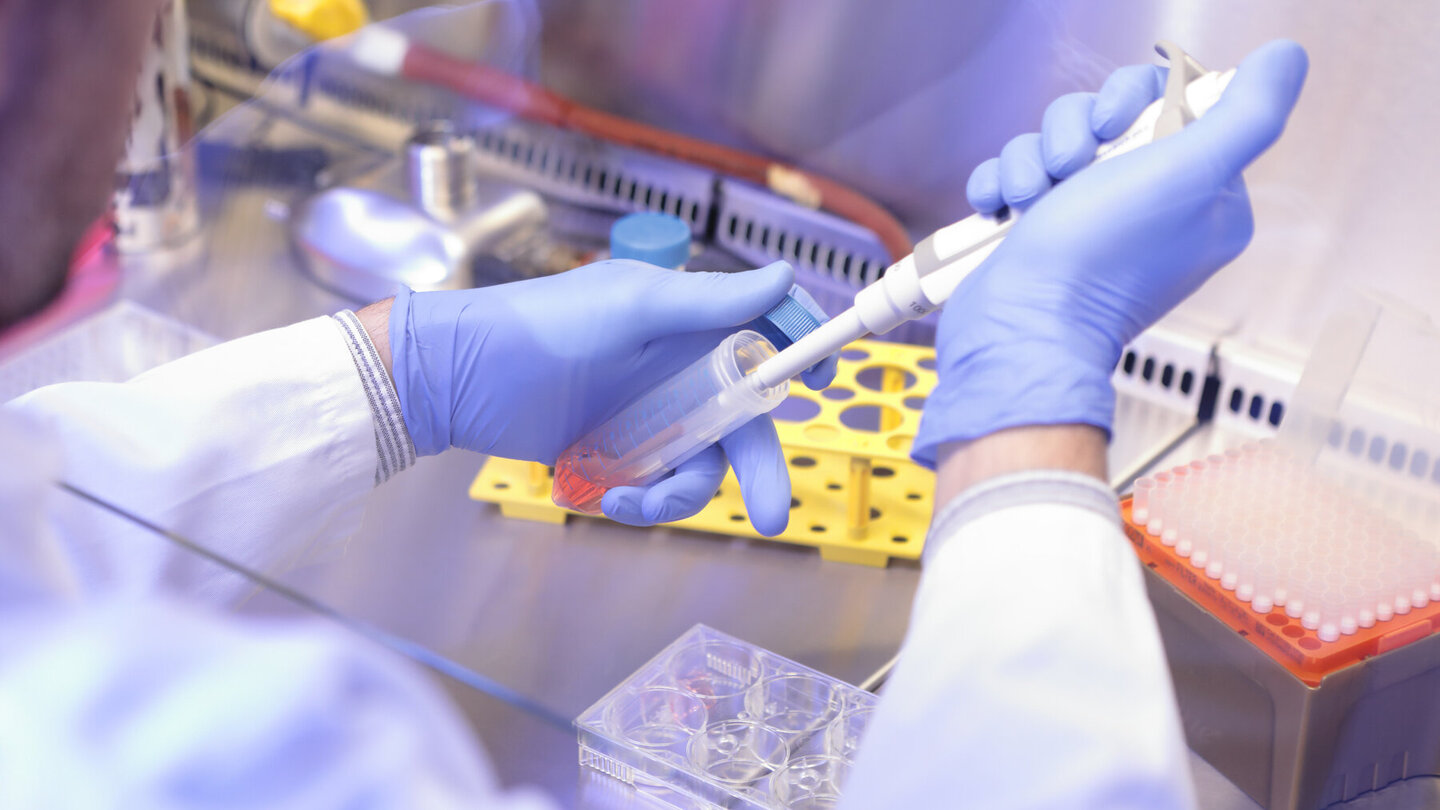

Our diagnostic portfolio comprises molecular genetics, molecular cytogenetics, and cytogenetics testing methods. We employ state-of-the-art high-throughput sequencing technologies (Next Generation Sequencing, NGS) including targeted gene panels, exome and genome sequencing as well as MLPA assays, repeat analyses, and classical chromosome and FISH analyses.
Our diagnostic services are also provided in cooperation with the “Medizinisches Versorgungszentrum der UMG Bereich Humangenetik“. All analytical processes in our laboratories are performed under controlled and monitored conditions. The Institute is accredited by the German Accreditation Body (DAkkS) according to DIN EN ISO 15189:2023 in the field of medical laboratory diagnostics for the areas Molecular Human Genetics and Cytogenetics. The accredited conformity assessment bodies are “University Medical Center Göttingen, Institute of Human Genetics” [ML-13161-02] and “University Medical Center Göttingen, MVZ of the UMG, Division of Human Genetics” [ML-13161-06].
New insights gained from the diverse research activities of our scientists are rapidly incorporated into routine diagnostics, enabling continuous expansion of our diagnostic portfolio. This ensures that we consistently provide genetic testing at the highest technical and scientific level.
Molecular genetics
With Next Generation Sequencing, we employ a modern technology that enables comprehensive and cost-efficient analyses, including panel- , exome- , and genome-wide approaches. Depending on the clinical question, we also perform conventional molecular genetic testing for known familial mutations using Sanger sequencing, as well as MLPA (Multiplex Ligation-dependent Probe Amplification) analyses for gene dosage determination. When appropriate, different analytical strategies are combined to achieve the most informative result.
Panel analysis
NGS allows the simultaneous sequencing of numerous genes within a single assay. By designing gene panels tailored to specific diseases or disease groups, we increase the likelihood of identifying the underlying genetic cause efficiently and economically. Based on this approach, we have established a broad range of diagnostic panels.
Exome analysis
In many rare or syndromic disorders, precise assignment to a specific disease group is not possible. In such cases, exome sequencing — the analysis of (nearly) all coding regions of the human genome — is a suitable alternative to targeted panel sequencing. Accurate and detailed clinical information provided for each patient is essential for meaningful interpretation of exome data. In some instances, parallel sequencing of both parents can further refine the analysis (so-called trio exome sequencing; consultation recommended in advance).
Genome analysis
Das Institut für Humangenetik der Universitätsmedizin Göttingen nimmt am bundesweiten Modellvorhaben zur Genomsequenzierung teil, das vom Bundesministerium für Gesundheit (BMG) initiiert wurde. Ziel ist es, moderne DNA-Sequenziertechnologien gezielt in die Patientenversorgung zu integrieren und damit Diagnostik und Therapie insbesondere bei seltenen Erkrankungen und onkologischen Erkrankungen entscheidend zu verbessern.
The Institute of Human Genetics at the University Medical Center Göttingen participates in the nationwide Genome Sequencing Pilot Project (“Modellvorhaben”) initiated by the Federal Ministry of Health (BMG). The aim of this initiative is to integrate modern DNA sequencing technologies into patient care, thereby substantially improving diagnostics and treatment — particularly for rare disorders and cancer.